Mending 12: reclaiming
Welcome to mending, a monthly haven where words meet inner wisdom, and stories intertwine with the art of health and healing.
At the heart of Narrative Medicine is a belief in the power of the human story. Words, among other human expressions, have the ability to enlighten and connect us to our most vulnerable or even seemingly insignificant moments in life.
These moments speak volumes to the richness of our humanity. And in sharing your words you support the production of neurochemicals like dopamine and oxytocin that activate your body’s healing potential and your brain’s capacities to overcome challenges in ways that cannot be understated.

Light
Dark
Your expression is where we find the intersection of Narrative Medicine and Functional Nutrition: in the recognition that everything is connected, we are all unique, and all things matter.
Each monthly issue of mending is a journey into a landscape of words, healing, and personal interpretation. They will be inspired by the gentle wisdom of poets and artists and the reflective insights of our guest contributors.
Why does this matter? Because in the riddle of healthcare, amidst the supposed precision of diagnoses and treatments, the human story often whispers, seeking to be heard. mending leans in and listens to these whispers. It invites you to do the same for yourself.
It’s time to explore the depths of your own narrative and the fabric of your human condition, beyond your signs and symptoms, or maybe in concert with them. Join me as we weave together threads of empathy, inquiry, and understanding. mending is more than a newsletter— it’s a dialogue, and initiation, and a celebration of the stories that make us human, illuminating their integral role in our paths toward healing.
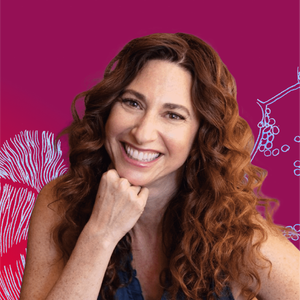
Mending 12: reclaiming with Cirila Estela Vasquez Guzman
did you think i was a city
by Rupi Kaur
did you think i was a city
big enough for a weekend getaway
i am the town surrounding it
the one you’ve never heard of
but always pass through
there are no neon lights here
no skyscrapers or statues
but there is thunder
for i make bridges tremble
i am not street meat i am homemade jam
thick enough to cut the sweetest
thing your lips will touch
i am not police sirens
i am the crackle of a fireplace
i’d burn you and you still
couldn’t take your eyes off me
cause i’d look so beautiful doing it
you’d blush
i am not a hotel room i am home
i am not the whiskey you want
i am the water you need
don’t come here with expectations
and try to make a vacation out of me
Copyright © 2014 milk and honey (Andrews McMeel Publishing)
Question: Which line or phrase did you feel the most when you read it? Why?
Contributor Answer:
“I am the water you need” because it is the essence of the poem. Water’s existence is vital to life itself. And so, then, is the subject. The other phrase is “always pass through” because it seems like although such a place is vital, one tends to overlook it all the time and to not stop to really engage, reflect, or even see. Finally, “don’t come here with expectations.” That really hit home because so much of our everyday lived-experience is filled with assumptions and pre-conceived notions (which is a human thing to do, but is often at the expense of so much.) How can we live and have no expectations? That is true freedom in life—to let go of any and all expectations. It is a human lifelong skill to undo social expectations, social norms, and social hierarchies that keep us in a box, keep us small, keep us from reaching our full potential.
Reader: Which line or phrase in the poem did you feel most when you read it? Why?
Writing Prompt: Write about a time you were misunderstood, and what it taught you about where you belong.
Contributor Response: As a Latina, 1.5 generation, immigrant, bilingual, woman of color and medical sociologist, being misunderstood has been an ongoing experience for me—in various contexts, settings, places, and times. However, that is exactly where the bridge building, community building, and capacity building happens.
Oftentimes in spaces where we discuss norms and values I am the one to always say or add “we welcome incomplete thoughts,” because so often we only raise our hands or feel we have something to say after we’ve really thought about it and feel confident and sure of our answers or contributions. That sets the precedent for us “knowing it all.” But I believe in more collective knowledge building that is only possible when folks from all kinds of backgrounds, places, and lenses come together and are able to share and expand upon ideas and topics without the pretense of knowing.
Society tells us we belong in certain boxes and oftentimes we ourselves re-enforce those ideas. Unfortunately, this leads to talent being lost or not maximized, and people not contributing their unique gifts to the world. After all these years, I still have not normalized being the only one in many spaces that will likely be asked a “what is that?” question, when I offer opinions. Yes, medical sociology is a field. Yes, 1.5 generation is a thing—it means those who were born in one country but grew up in another. Where do I belong? I used to think I only belonged with those who speak my language. But my career has been defined by breaking outside of that space. I want others to know sociologists exist. I want others to know that immigrants are smart and successful. I want others to know that Latinas do not all have children young. I want others to know that being bilingual is a strength but also double the work.
I belong everywhere so that I can help to advance equity, knowledge, and awareness. I belong at the academic table where only white men are making decisions. I belong at the dinner table with senior folks. I also belong in the community. I belong, period. I am no longer shy, or quiet, or someone who remains in the shadows, because I know if I do not use my voice, my platform, and my power then I cannot expect the next generation to thrive.
“Reader: Write about a time you were misunderstood, and what it taught you about where you belong. (Set your timer for 5 minutes and write from the heart.)”
Reader: Write about a time you were misunderstood, and what it taught you about where you belong. (Set your timer for 5 minutes and write from the heart.)
You can also send your responses and feedback to scribe@andreanakayama.com
Guest contributor: Cirila Estela Vasquez Guzman, PhD, MCR is an Assistant Professor at OHSU. Dr. Guzman's training as a medical sociologist focused on race, immigration, health inequities, policy, and community engagement research with a multi-level understanding of factors affecting healthcare and health. Her mission is to address institutionalized injustice and structural violence to improve the wellbeing of Latina/o’s immigrants.